
As a leader, I’ve been really affected by Newport’s book. I have done a lot of reflecting on how my own team is run and have identified many, many areas for improvement. While I am excited to take the leap into a more focused working style, I feel bad for the way the team has been run to date. I see the day to day chaos brought on by the pressure of keeping up with email overload, text threads, and incessant instant messages throughout the day and night. Even our personal time has been violated by the constant connectivity and the expectation that no matter what time of day, we are expected to answer the phone. We have gotten accustomed to working in a constant state of panic.
This week we had a major outage. The team including myself probably slept a cumulative 20 hours each between Monday and Friday. Then, at about 2AM on Friday morning, I was validating some critical payroll files and realized that someone on my team had made a HUGE mistake. A mistake brought on by sleep deprivation and workplace distraction, no doubt. I had to sacrifice my own sleep to review every single rate for every single person in the file, one by one. Looking back, if we had taken the time up front to properly plan, divide and assign the work instead of operating in sheer panic that thousands of union workers may not get paid correctly, maybe our success would have come a lot earlier than Saturday morning.
In an article from Talented Economy, “40 percent of an employee’s actual workday is spent on non-productive efforts, costing companies millions in lost productivity.” Furthermore, according to a statistic from Dynamic Signal, in a 40-hour workweek, the average worker spends 13 hours on email alone. I reference more eye-opening statistics in my recent white paper titled: Cultivating a Deep Workplace: How working deeply can take today’s project teams from scattered to streamlined.
The paper is meant to expose the day-to-day distractions project teams face as well as act as a guide for leaders, project team members and companies to alter their working style to optimize productivity and reduce workplace distraction. It is targeted at corporate project teams in hopes that it will help open their eyes to the inefficiencies of how we work today. I begin with a narrative describing the world of one worker, a data conversion lead on a global system implementation inundated by distraction day in and day out. I then reference Deep Work as well as many other articles to highlight major distractions within four main areas: Environmental, Operational, Habitual and Societal distractions. A lot of workers blame project leadership and their unreasonable deadlines for the day-to-day chaos, low-quality work and burnout among project teams. While I do believe this plays a factor, after reading Newport’s book, I think a whole lot more is within the team’s control than they think. “According to a survey conducted by Udemy Research — aptly named “2018 Workplace Distraction Report” — nearly 3 out of 4 workers (70 percent) say they feel distracted at work. As organizations place an ever-increasing focus on adopting new technologies to aid collaboration toward a more responsive, real-time business, we’re now on full-tilt communication overload.” Our global project team is made up of hundreds of team members. If more than half of them is spending their days without focus on their deliverables, it’s no wonder we aren’t meeting our deadlines and not surprising that we’ve had major quality issues among highly-skilled and intelligent workers. We expect our people to always be available and beyond that, we expect them to be working on OUR issue immediately even if they are currently working on a different task. This expectation not only leads to distraction, it also leads to workplace anxiety. We expect people to answer texts and emails immediately, and that is just violating! According to an article from The Atlantic titled How It Became Normal to Ignore Texts and Emails, a Tech Director at the Massachusetts Institute of Technology says “You create for people an environment where they feel as though they could be responded to instantaneously, and then people don’t do that. And that just has anxiety all over it,” These people need don’t need any more anxiety than they already have working on such a highly-visible project. I owe it to them to provide them with a workplace and project operating style that promotes concentration and productivity.
After reading Newport’s book, I feel both educated and empowered to employ an alternative work culture within my own team. And I already feel like the tides are changing – for the better. A new way of working is on the horizon in which my team’s performance, productivity and morale will become supported by leadership who values focus over chaos. From here on in, Cal Newport’s thoughts, ideas and principles will be my commandments. I am sure I will face adversity from those who haven’t yet become enlightened on the damaging effects on how we currently work. And you know what, they may just be getting an early Christmas present from me in the form of a tattered, marked-up, hand-me-down gold and black book.

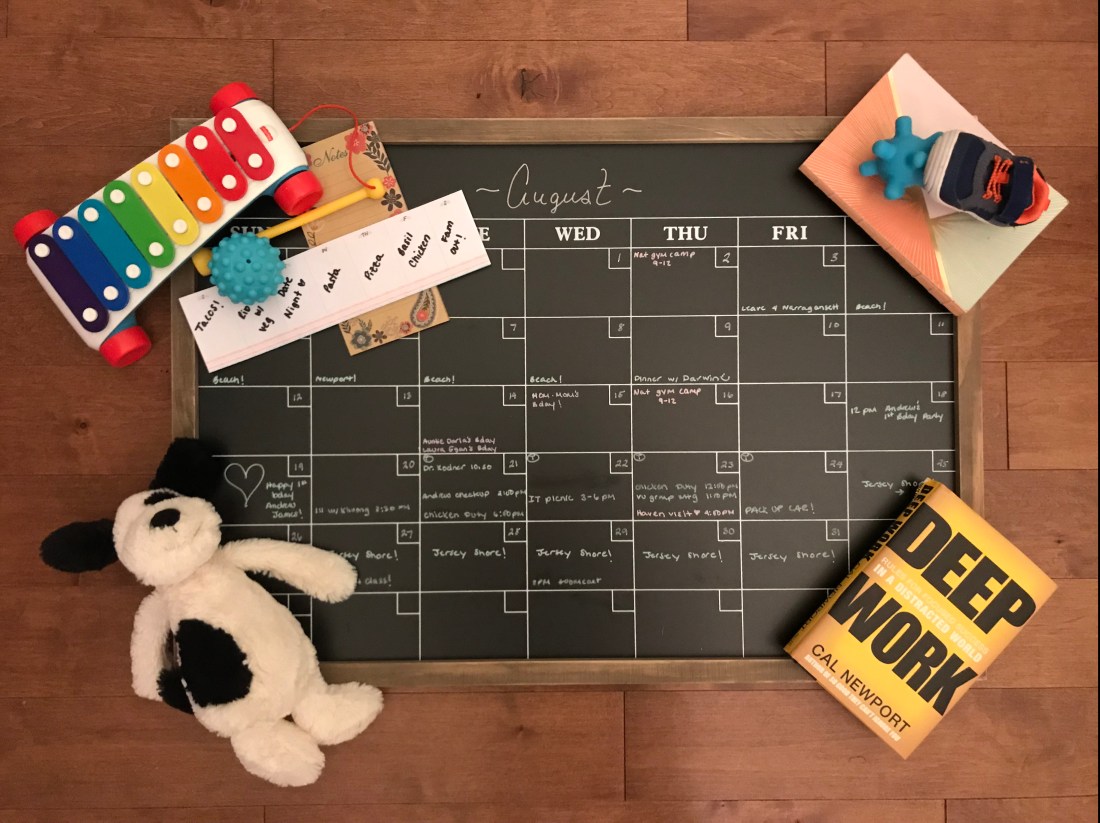
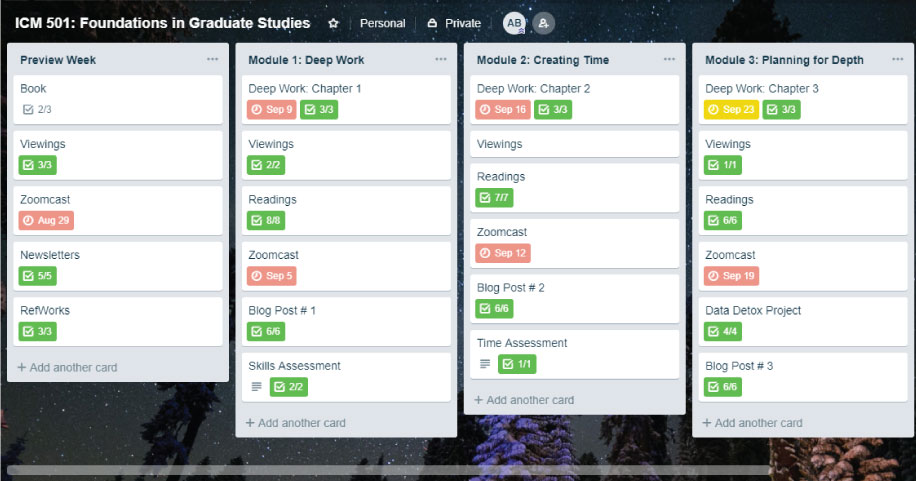 I’ve been doing some form of project management for over 10 years. I’ve taken project management training and certification courses, listened to podcasts, shadowed more senior project managers and read countless books on project management. Each project manager has his or her own style, and I’ve learned that there isn’t one right or wrong way to manage a project. However, there are some key principles that are required – one of those principles is understanding how to create a plan and deliver on schedule. Now, I have gotten really, really good at creating plans and sticking to them at work. I can drive teams to deliver products and services on time and under budget like I was born to do it. The one thing I can’t do, however, is stick to any kind of plan in my personal life. No matter what I try, it always falls to pieces. I can’t seem to get a consistent cadence going. The number one reason for this is because I lack focus in my personal life. I have so many obligations and things I need to do for my family, that I sacrifice most things for that. Part of the hardest thing about being a working mom is the constant desire to give your kids the life a stay-at-home-mom would be privileged enough to give them, only you’re also working 40-60 hours a week depending on the week. Driven by “working mom’s guilt”, our post-work trips to the park, board games, kitchen dance parties, manicures (with sparkles on top), and seasonal cookie decorating almost always trump whatever other tasks I put on my plate. This sabotages any plan I put together (for a good cause, of course…)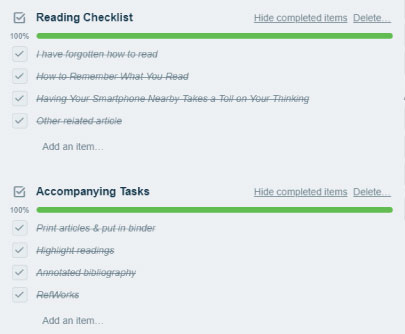

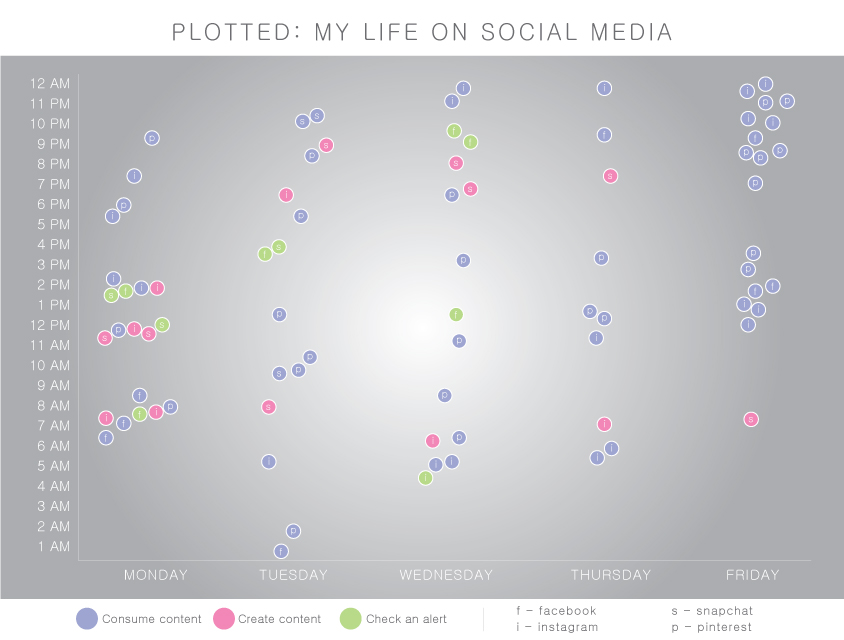

 2:52 AM: I am just sneaking back into bed after getting my 12 month old son back down to sleep. I have to get a good night’s sleep or I am not going to wake up in time to create my slides for the 9:00 AM meeting.
 The Corporate Mom Blog